"We Didn't Start The Fire"
The Warner split is just another chapter in the media evolution that's been burning for 100 years, since radio. Eventually, Netflix will be a casualty. Don't fall victim to chronocentrism.

Today’s announcement that Warner will split into streaming + studios and cable networks, alongside last year’s spin out in the Comcast / NBC Universal world, may make it seem as if there is more change now than ever before in media but that is chronocentric thinking. Chronocentrism = “The belief that one's own time period is uniquely important or significant, often to the exclusion or dismissal of other periods in history.” Since the advent of radio the entertainment industry has endured major change after major change and then finds its footing until the next period of change - which will happen again - and again.
Will these new stand alone cable companies be successful? Will cable networks go away sooner, or later? The only answer you can believe is that No one knows and that it will take years to find out and we might not even know what success or failure looks like when it happens. (Do not listen to anyone who tells you they know). I would also argue it doesn’t really matter because whatever happens the industry will evolve to adapt - as it always have.
Let’s remind ourselves that we have been here before by looking at some LA Times articles over the decades. Some threats of the past were real - like streaming has been - and some were not - but the constant is technological and business change.
TV Will Kill Movies
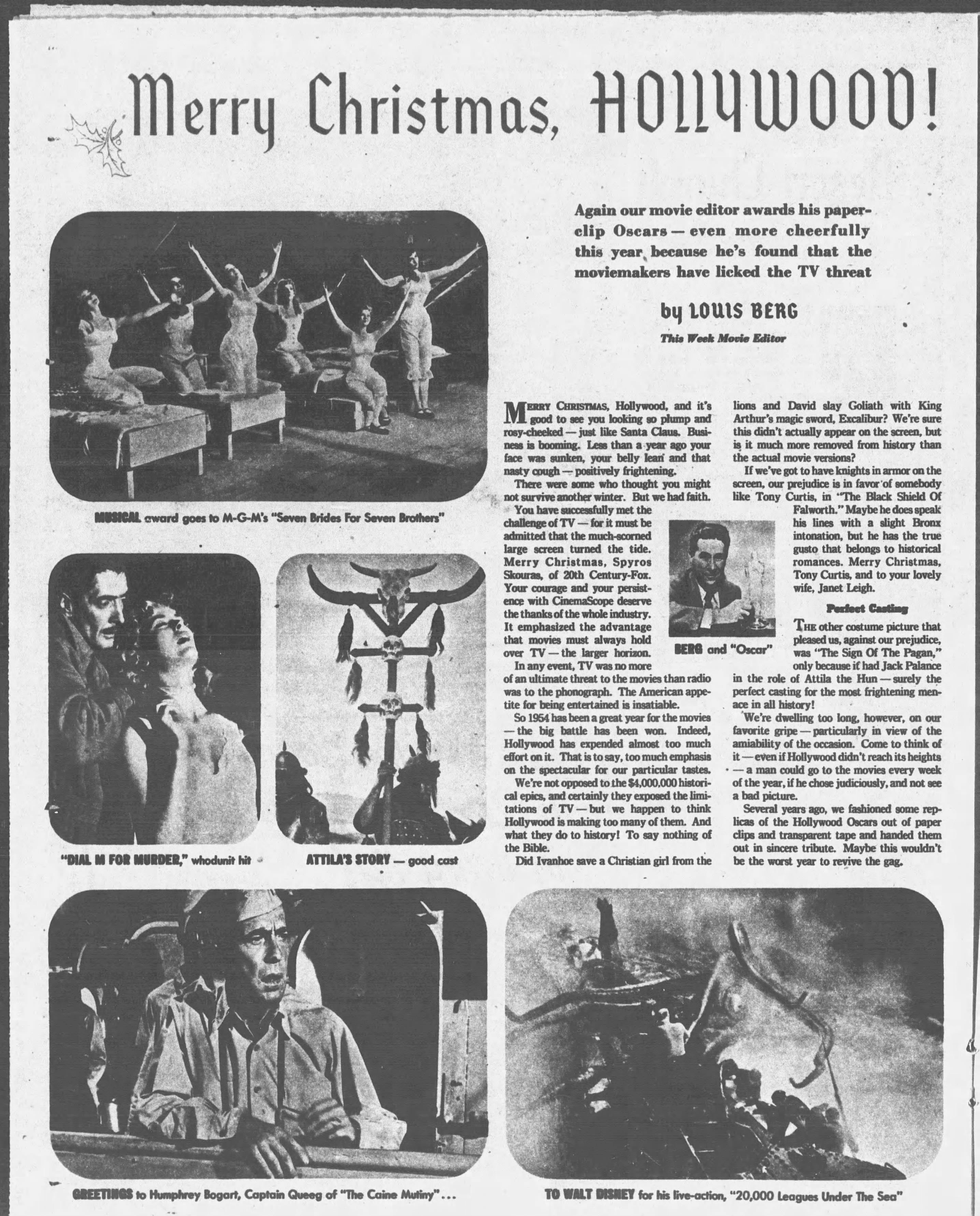
Back in the 1950s the rise of television spelled doom to movie theater attendance, or so the hand-wringers of the time would have you believe. This 12/19/54 article celebrates that “Hollywood”, meaning movies, “successfully met the challenge of TV” even though “some thought [it] might not survive another Winter.” Yet in the end “TV was no more of an ultimate threat to the movies than radio was to the phonograph.” Yes, people loved to watch older movies at home but that did not diminish the thrill of seeing a new movie on the big screen; with others; with popcorn; with soda. Even a pandemic in the 2020s could not destroy the movies - change it yes - but not destroy it (Lilo & Stitch anyone?)
Home Video and Cable Will Destroy Everything Else
This 1980 article describes a hot time in the TV world at the turn of the decade with 1) a meeting of the National Cable TV Association to discuss burgeoning cable business models 2) the NBC affiliates meeting seeming “curiously antiquated and tame by comparison”, 3) CBS announcing it had formed a cable television division 4) ABC saying that it might too 5) all three networks exploring home video divisions, and 6) 20th saying it could see home videotapes being sold right in movie theater lobbies - of the same films playing there at the time.
The articles goes on to note
All these moves are fraught with controversy, All are seen as life-threatening by companies in the established order. A critical turning point in America's entertainment media seems to be at hand. Five years ago, it was basically business as usual in Hollywood. Pay TV was just starting to go national via satellite and a home video cassette market was a long-promised but still elusive dream. But since then, exponential growth has occurred in these new electronic media or "ancillary markets," as the movie men call them from their perspective. Over the past year, pay TV subscribers have doubled to about 7 million, and cable itself (the basic service) now reaches one in five U.S. homes. All of the major studios now sell pre-recorded video cassettes, whereas only two did in March, 1979.
This sounds like a description of the last five years just with different technology and different corporate changes yet the business kept on booming in its new form(s).


The Internet Will Take Over
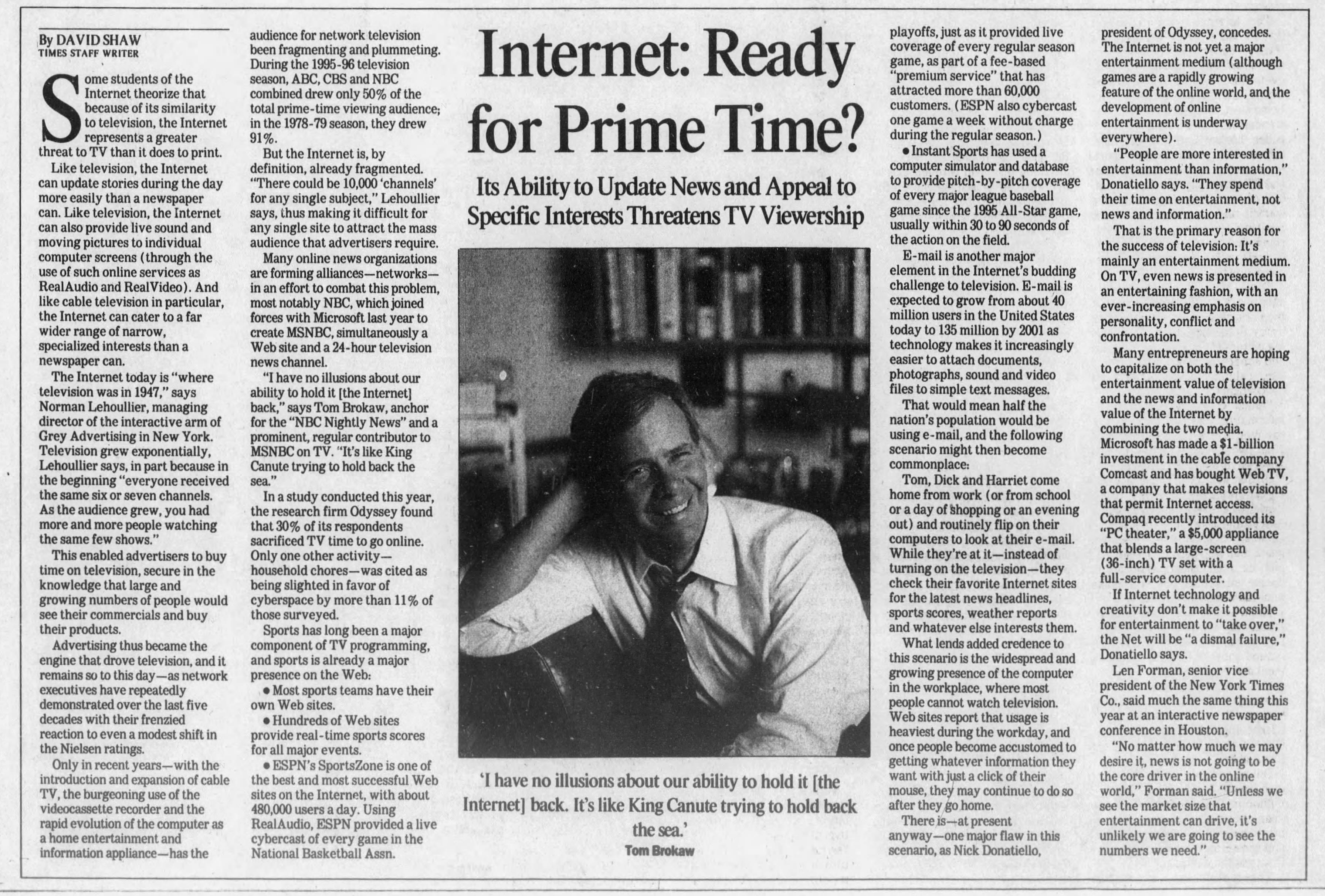
In 1997, the same year Netflix was founded but 10 years before its streaming service began, the Times asserted that the Internet’s “ability to update news and appeal to specific interests threatens TV viewership.” What actually happened, of course, was that more than threatening it, it redefined viewing it to a total audience of streaming + linear combined.
But in 1997 the salient observation was that ABC+CBS+NBC’s combined share of TV was 50% of Prime Time viewing vs. 91% in 1978, a drop caused by “the introduction and expansion of cable tv, the burgeoning use of the videocassette recorder and the rapid evolution of the computer as a home entertainment and information appliance.”
The article does have the foresight to predict this scenario: Tom, Dick and Harriet come home from work (or from school or a day of shopping or an evening out) and routinely flip on their computers to look at their email. While they’re at it - instead of turning on the television - they check their favorite internet sites for the latest news headlines, sports scores, weather reports and whatever else interests them.”
It then goes out to point out one flaw in this concern “The Internet is not yet a major entertainment medium… That is the primary medium for the success of television, its mainly an entertainment medium. If Internet technology and creativity don’t make it possible for entertainment to take over, the Net will be a dismal failure.”
28 years later the “Net” has become an entertainment medium but we have more linear and cable networks than 1997 with five Broadcast, 100+ cable nets still, and multiple “digi-nets”. They are all struggling financially and are in a state of decline that cannot be changed but that whole ecosystem has thrived much longer than many doomsayers expected, giving companies a chance to figure out their next moves.
Scared of Netflix
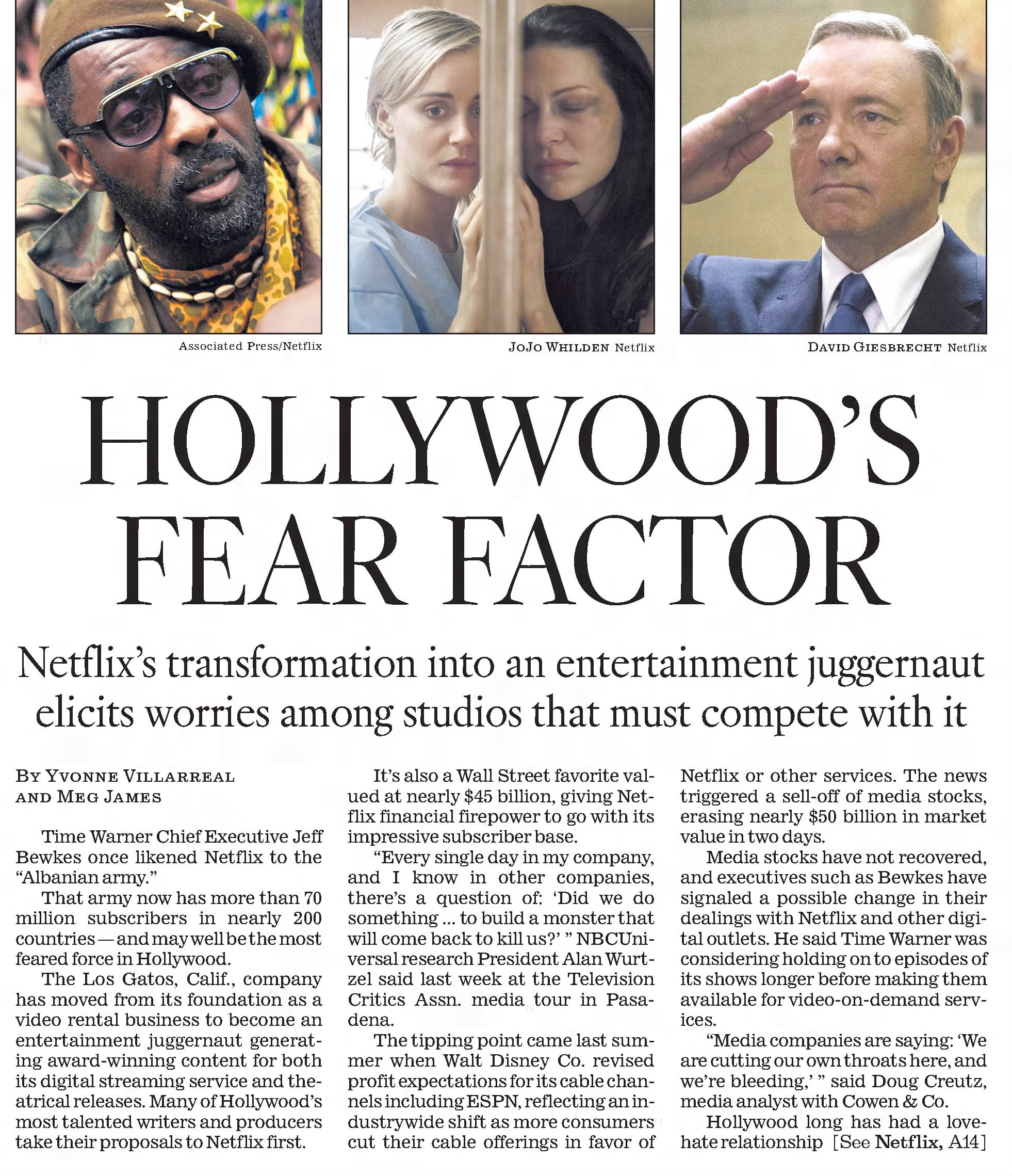
Almost ten years ago the Times blared to the world that Hollywood is scared of Netflix (1//18/2016) and today it has moved past that fear and is now taking the action in the decoupling we are seeing from two of the biggest traditional media companies. But it took nine years to get here and most of the studios that “must compete” with Netflix are still up and running - some quite powerfully - even if they look different.
The Future
What is the point of this history lesson? To demonstrate that the entertainment industry has always been afraid of change - sometimes with good reason but often without. “Experts” rarely predict the impact of the change, its scope, or its timing with accuracy so don’t put much stock in any forecast. Like the symbolic fire that Billy Joel sang about which is “always burning since the world’s been turning”, TV & media will always evolve at its own pace and in an unpredictable manner the consumer will decide.
Right now is just one in a series of chapters - not the most important and not even the most radical. All the periods of change above seemed just as transformational as today’s to those who were working in it at the time. Eventually, streaming will be disrupted by technology that we do not know about today and Netflix will face decline that it cannot stop and be the antiquated way to watch TV. It might even have to switch back to DVDs!