"Previously On..."
A recurring look at recent TV I've watched, notable industry news, items from my archive & their significance, and the history of TV programming as told through the pages of TV Guide or Variety.


Woman In Cabin 10 (Netflix): I read the novel by Ruth Ware which I found just OK but I still enjoyed this original movie starring Keira Knightley and Guy Pearce. While it is a fairly sophomoric thriller it moves fast, has some good plot turns and the acting is good enough to make it a fun watch.
The Diplomat (Netflix): In my prior post, I analyzed the program’s performance which is not particularly strong according to both Luminate and Netflix. This is disappointing because S3 of The Diplomat is one of the best TV seasons of the year and the program has improved with age. The dialogue is snappy and effortlessly moves back and forth between comedy and savvy politics. The plots are novel, engaging and filled with more clever twists in one season than most shows can supply in five. I look forward to S4 and hope that despite the low numbers it will stay around a little while longer.
Slow Horses (Apple): I am not as enamored with this British spy series as most but I do like Gary Oldman’s Jackson Lamb. Some of the plots get a bit silly and hard to believe which takes me out of the skulduggery. (Warning: Spoilers) In particular, for this season in the most recent episode, a character who was portrayed as a patsy was revealed to be a terrorist leader but it happened in a way that even the IMF could not orchestrate.
John Candy: I Like Me (Amazon): A charming documentary about the comedy superstar who left us too early. The film thoroughly explores his tragic upbringing, his early days in comedy in Canada and SCTV, his rise to movie stardom, his physical and mental struggles after 40 and his death that he did little to prevent per those who knew him. There has not been much coverage on Candy since his death more than 30 years go so this is a nice way to celebrate his life and career.
My Father The BTK Killer (Netflix): While getting to hear the story of BTK from Dennis Rader’s daughter is a notable twist, not much new ground is covered in the story which has been well-documented since his arrest 20 years ago.
The Hand That Rocks The Cradle (Hulu): The original movie was silly but fun. This new version is stupid and boring. The nanny/villain played by Maika Monroe is too creepy to ever have been considered by the mother played by Mary Elizabeth Winstead and the way in which she infuses herself into the household rings untrue. (Warning spoilers ahead). The Winstead character has a best friend played by Martin Starr who uncovers the nanny’s true intentions but in cliche friend-of-woman-in-jeopardy-Lifetime-movie fashion, he tries to confront her instead of telling anyone and winds up dead. Dumb. At the end we find out there is a connection between the two protagonists which makes the entire script a bit preposterous. Don’t waste your time.


Showrunner Musical Chairs: As The Duffer Brothers and Taylor Sheridan leave their current homes for new studios with steaming services that are trying to stay competitive, it’s clear that we are in the next phase of SVOD original development. The minds behind the earliest streaming dynasties are looking for greener pastures and other names will probably follow as corporate ownership evolves.
It is easy to understand why rivals are willing to offer hugely lucrative packages to “A” level showrunners given their proven track records and that the audience knows their names. It is difficult to count on any one show breaking thru the clutter so someone who knows how to do it either at scale (Sheridan) or on a culturally seismic level for a single series (Duffers) does provide better odds.
But history indicates there is still plenty of risk when seasoned talent moves later in their careers:
After making CBS and ABC #1, NBC lured Fred Silverman to run programming but it stayed in third place.
Many TV stars of one or two iconic series failed later in other shows such as DIck Van Dyke, Mary Tyler Moore, Andy Griffith, Kelsey Grammer, Michael Richards, Bob Newhart, Michael J Fox, Tony Danza, Rob Lowe, John Stamos, Robert Stack, and James Arness. The list goes on.
Showrunners can have worse track records after leaving their original home such as Norman Lear post-CBS, Aaron Spelling in-between ABC and WB, David E. Kelly’s move from Fox to Warner, and Steven Bocho in his later career.
TV program creator success can be cyclical. Greg Berlanti had 18 shows on the air at his peak, today he has just a few.
It will take years before we know whether or not these mega deals will be worth it - especially Taylor Sheridan who doesn’t move until 2029 - an eternity at the current rate of change.

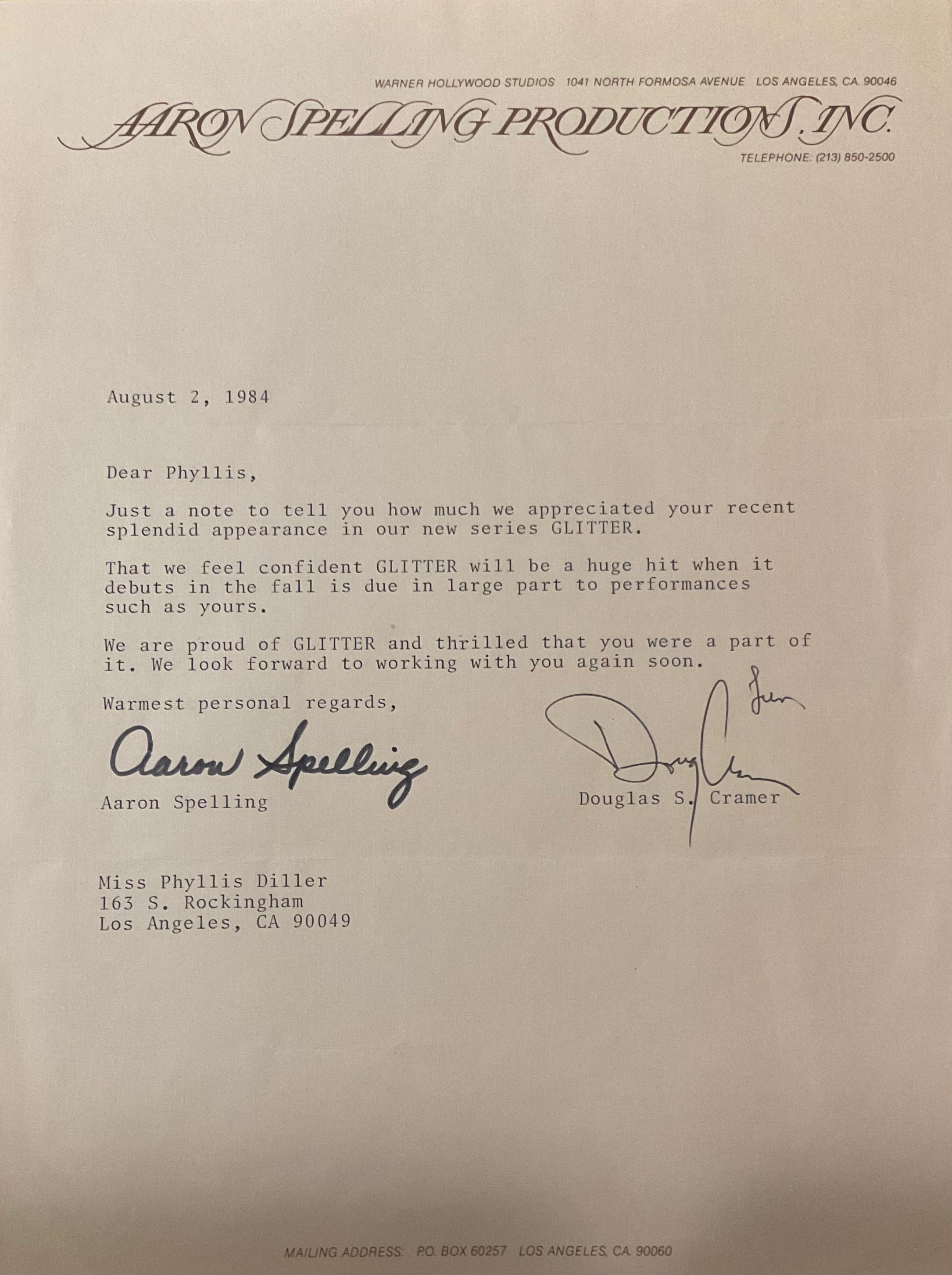
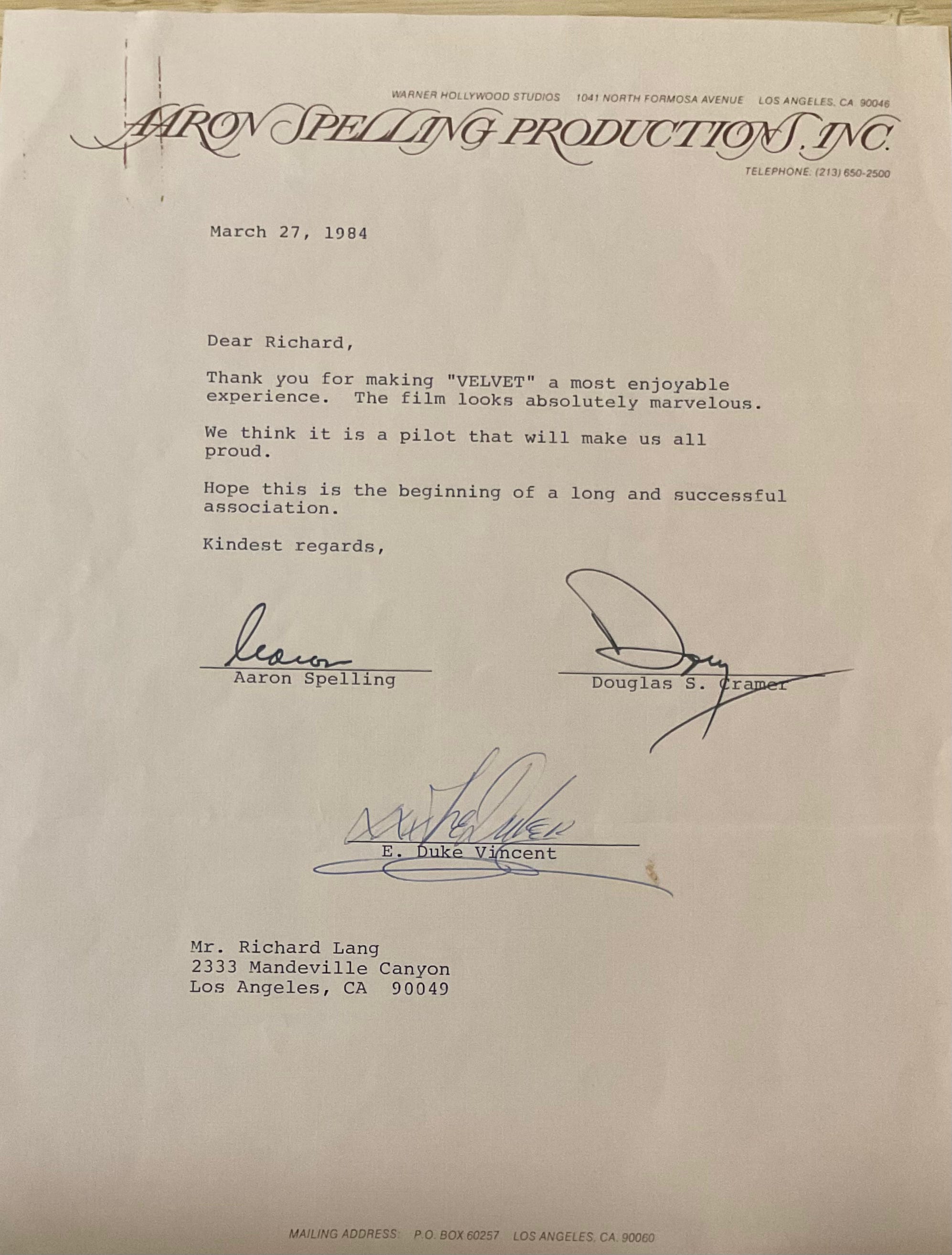
Aaron Spelling Says Thank You: The uber producer of the 1970s and 1980s cast thousands of actors in guest starring roles and hired hundreds of episodic directors across his many ABC series. Based on the evidence presented here, he also sent a lot of thank you letters.
The top letter is to comedienne Phyllis Diller who appeared on an episode of the failed Spelling show Glitter about a People-type magazine which lasted only 14 episodes and starred David Birney and Morgan Brittany. Diller appeared in episode 12. Also signing is Douglas S. Cramer - a highly influential producer in his own right, and frequent Spelling partner, who produced Wonder Woman (not a Spelling series), Vega$, Dynasty, and Matt Houston.
The second letter is to director Richard Lang who worked on such shows as Kung Fu, Charlie’s Angels, Fantasy Island, and Beverly Hills 90210. He directed a failed 1984 pilot called Velvet that was a blend of Charlie’s Angels and The A-Team and that is why he received this letter from Spelling and Cramer.

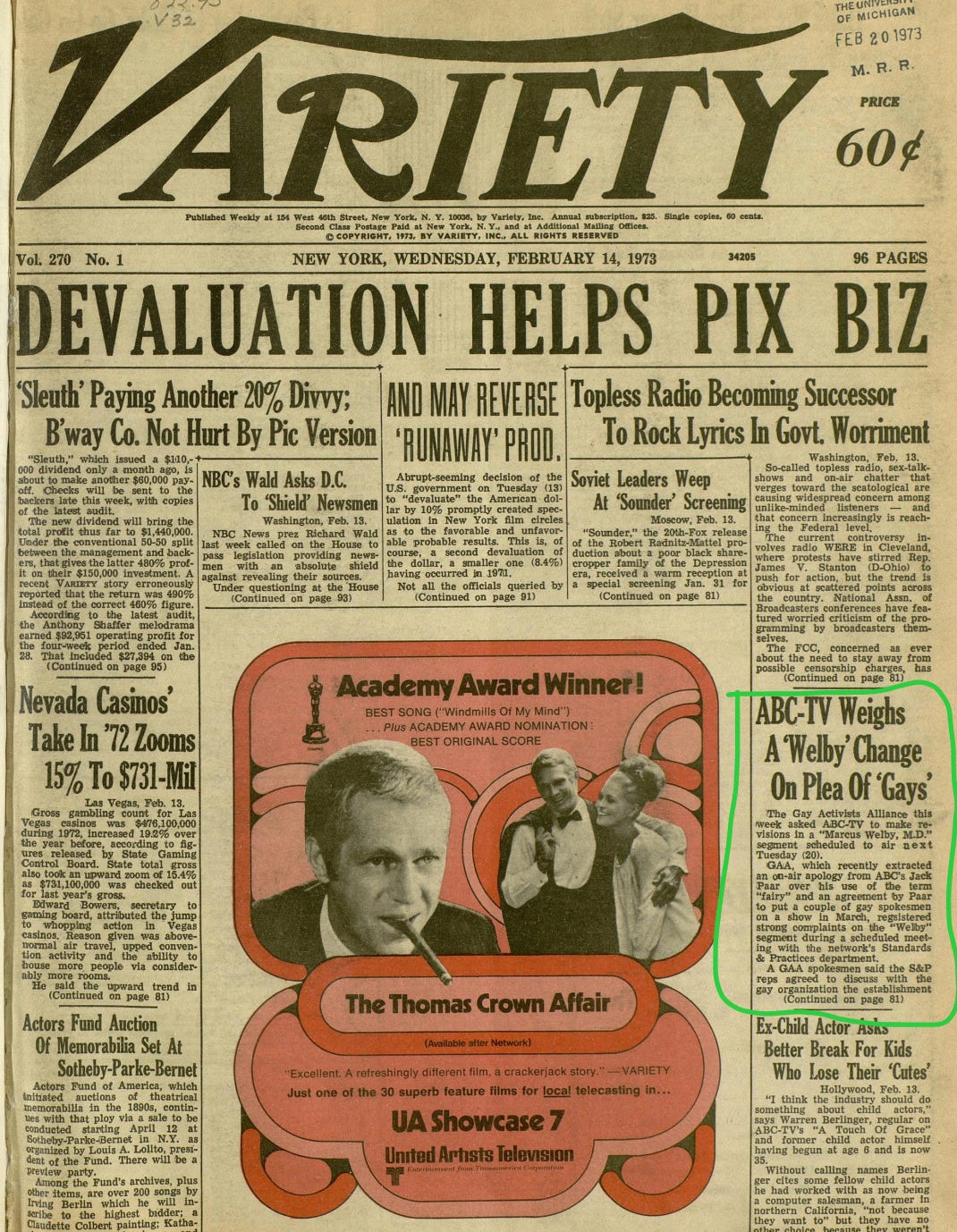
For this week’s look at TV history through the pages of Variety, the random date generator led to the 2/14/73 edition.
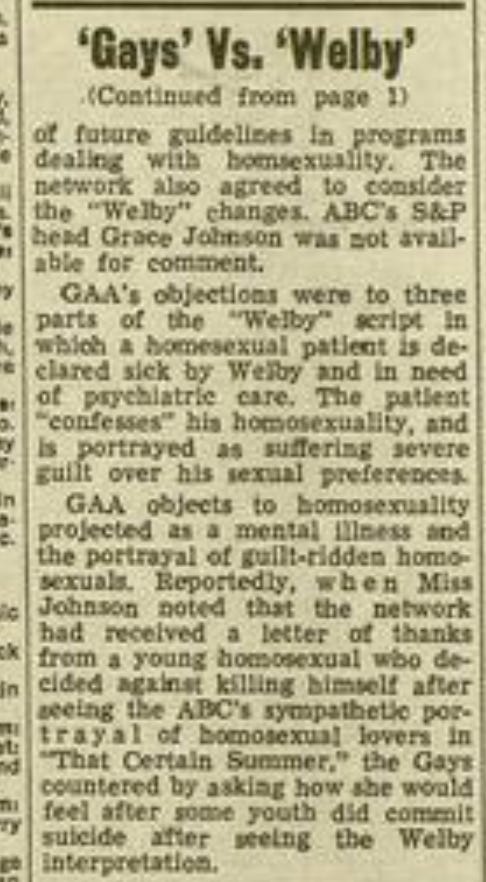
1973 was very early in the fight for gay rights and there is a cover story about a prominent advocacy group of the era asking ABC to re-edit a new Marcus Welby, ABC’s #1 show at the time (#13 overall) that was scheduled to air the next week. In the episode, homosexuality is treated as an illness and mental condition that needs to be corrected. The episode was called “The Other Martin Loring” and here is the synopsis on Wikipedia. It does not appear that any substantive changes were made despite this engagement with ABC.
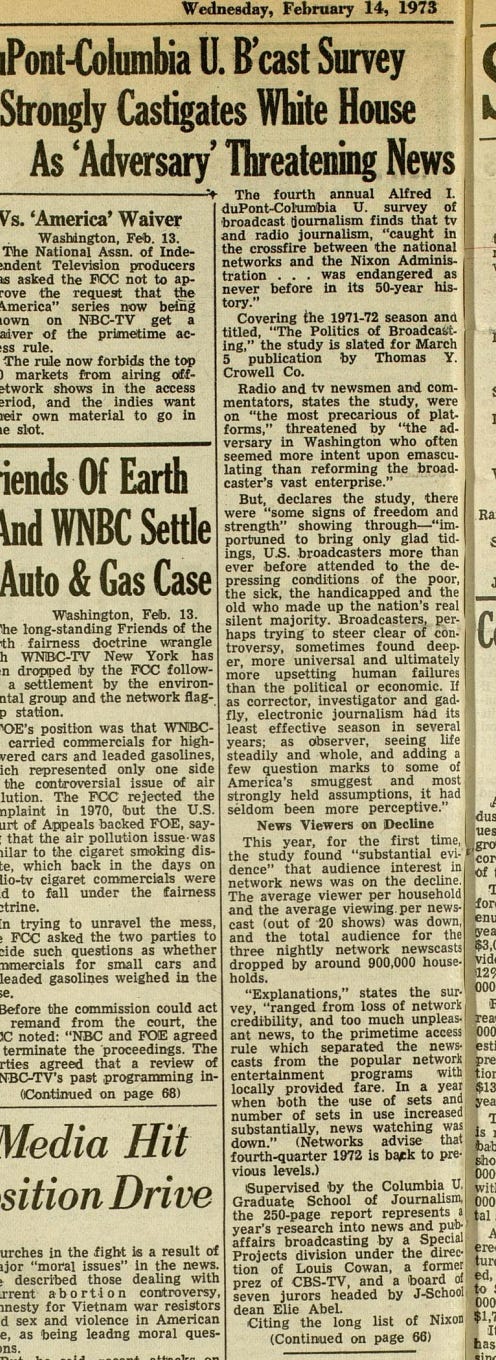
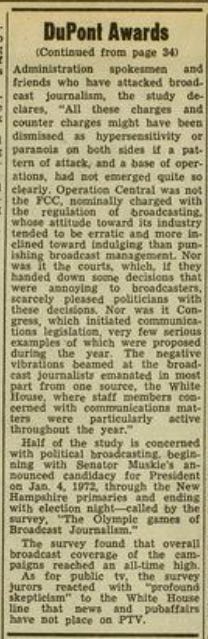
This is a good article for Chronocentrists who believe what is happening between the media and the government today is unique or the most extreme. Not true. 52 years ago reporters said that journalism was “caught in the crossfire between the national networks and the Nixon Administration and was endangered as never before in its 50 year history.” This was from a study conducted by Columbia which also referred to an “adversary in Washington who often seemed more intent upon emasculating than reforming the broadcaster’s vast enterprise.” The study also found that audience interest in network news was going down and that there is a long list of Nixon administration spokesmen and friends who have attacked Broadcast journalism
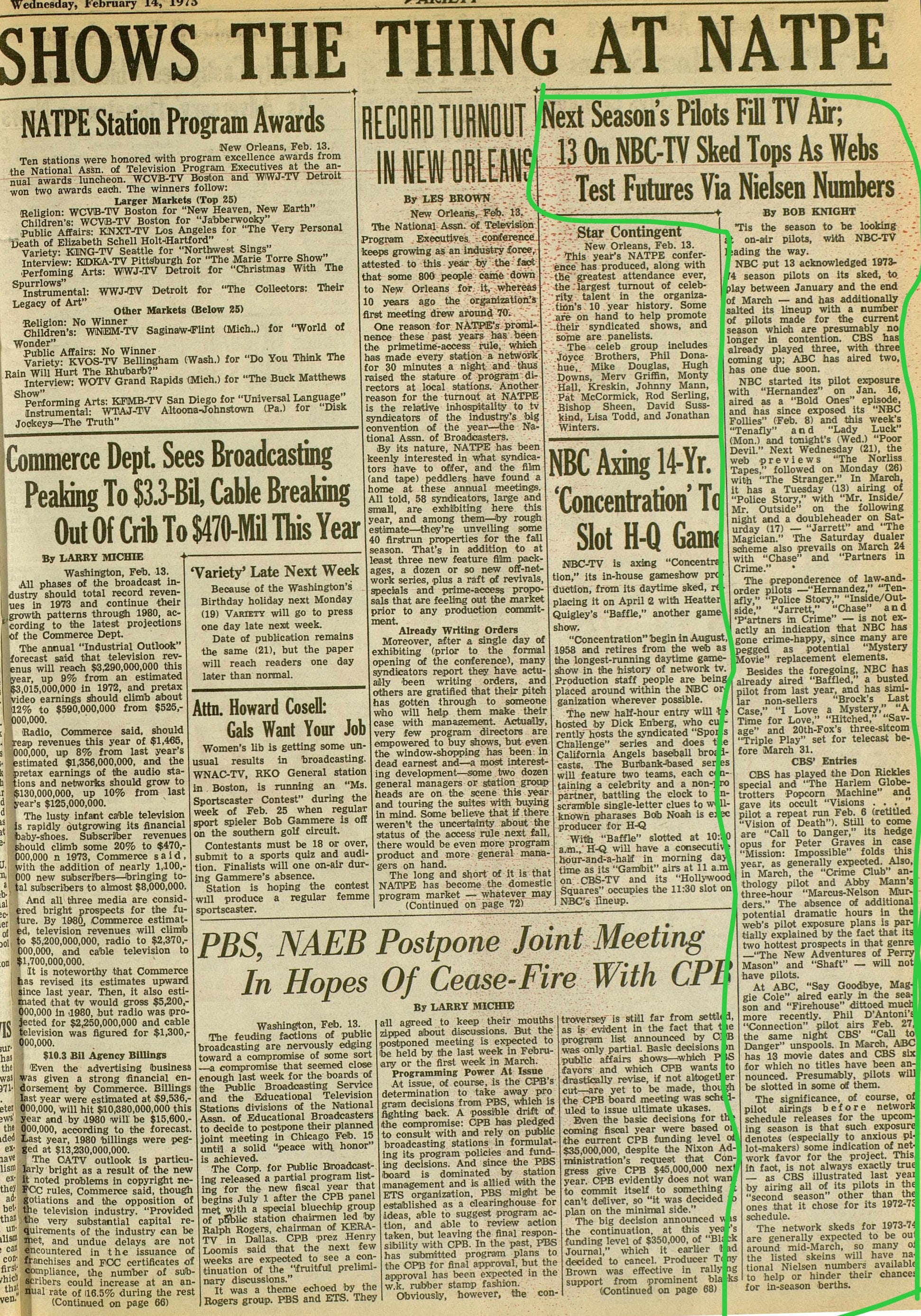
During my formative years watching TV - the 1980s - and ever since, most network pilots air only after a series is picked up to air. Busted titles rarely got on the schedule, especially in-season. CBS did air a Summer Playhouse for three seasons in the late 1980s which was comprised only of all unsold pilots. Some pilots also aired as TV-movies, which do not exist anymore.
But per this article many of the pilots that were being considered for the 1973/74 season aired during the 1972/73 season in order to test how they would perform. Between January-March 1974 NBC had already aired 13 pilots while CBS and ABC also aired multiple. Based on the titles reported in the article most did not make the Fall schedule and only one, The Marcus Nelson Murders which became Kojak, was successful.
In the 1970s the networks had a lot of slots to fill - including many TV-movie slots - so these pilots helped close those holes and gave executives data to plan for the next season. By the 1980s networks were no longer willing to sacrifice in-season real estate for untested and unproven programs that could sink in the Nielsens.
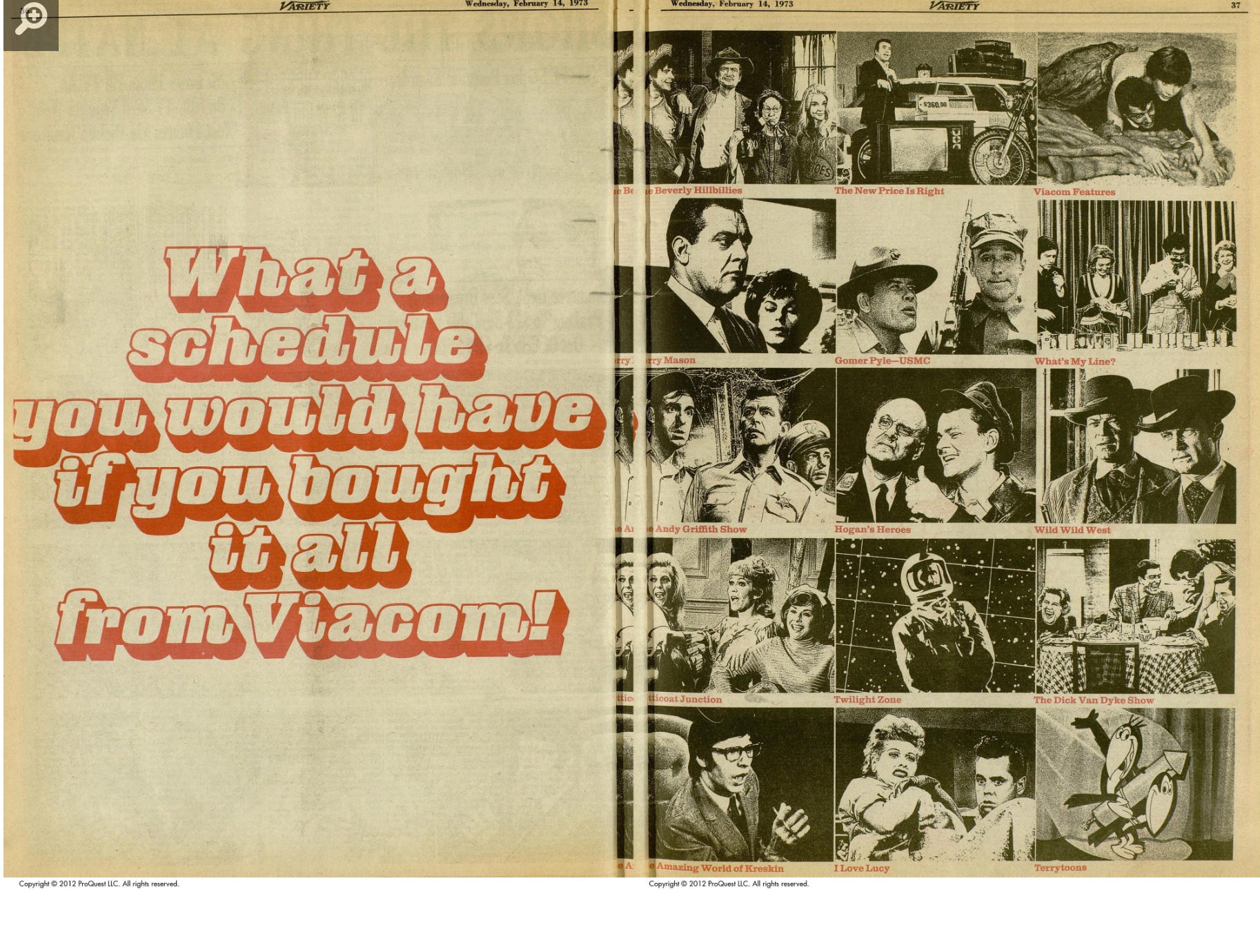
This ad foretells what David Ellison wanted out of Paramount, a wealth of IP. Viacom’s library comprises a good part of the foundation for today’s Paramount and many of these show are still staples today on cable, diginet, Fast, AVOD and SVOD.
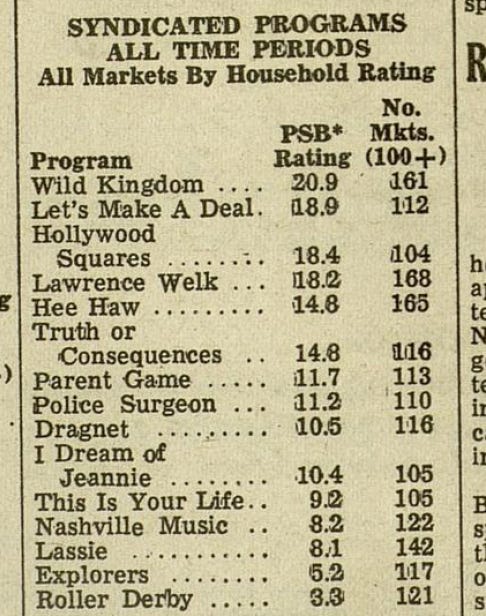
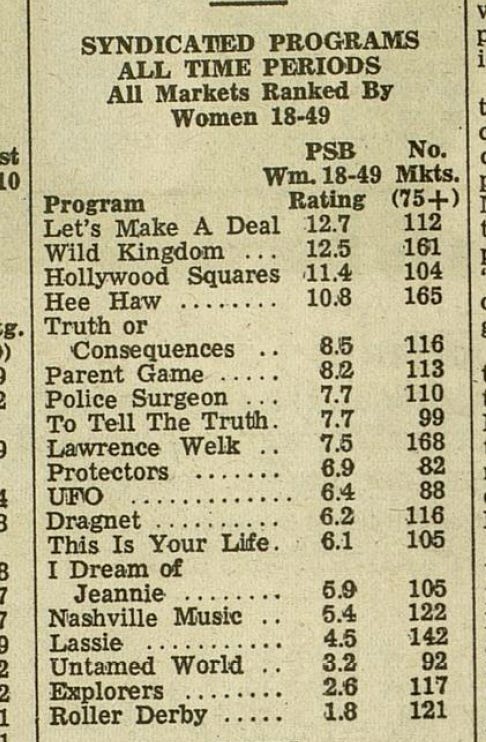
Syndication charts have been dominated by Wheel Of Fortune and Jeopardy for 40 years but here we have rankers from 1973 - and with F18-49 demos to boot! I have never seen data this far back for syndication.
Game and variety shows dominate the list. For the overall HH rank, Mutual Of Omaha’s Wild Kingdom is #1 and the only program with a rating over 20.0. Other variety shows are Lawrence Welk, Hee Haw and This Is Your Life (variety-ish).
A first-run version of Let’s Make A Deal, concurrent with ABC daytime, was #2. Other game shows that rank high include Hollywood Squares, Truth or Consequences and The Parent Game. The latter lasted only one season and was a Newlywed Game clone but contestants are asked questions about their children.
The only off-net sitcom here is I Dream of Jeannie. Police Surgeon was a Canadian half-hour crime drama.
The F18-49 ranker is not significantly different. The most notable additions are the British live-action shows UFO and The Protector and the revival of Dranget from 1967. I would have expected these series to be male-driven.
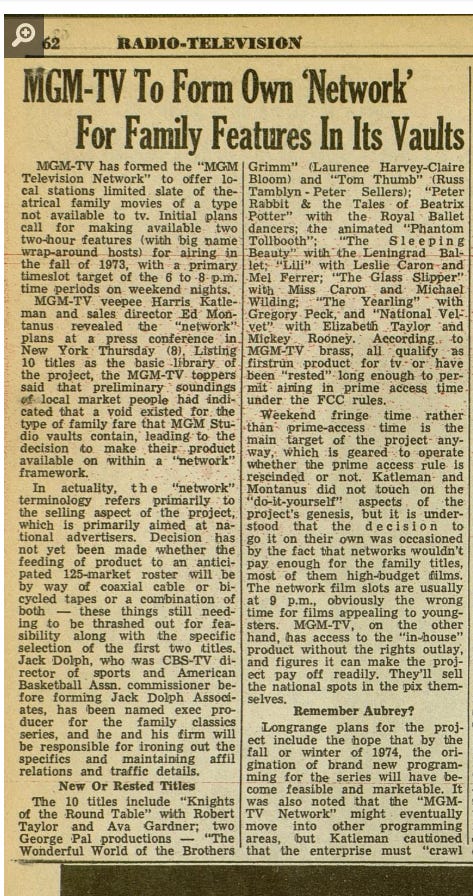
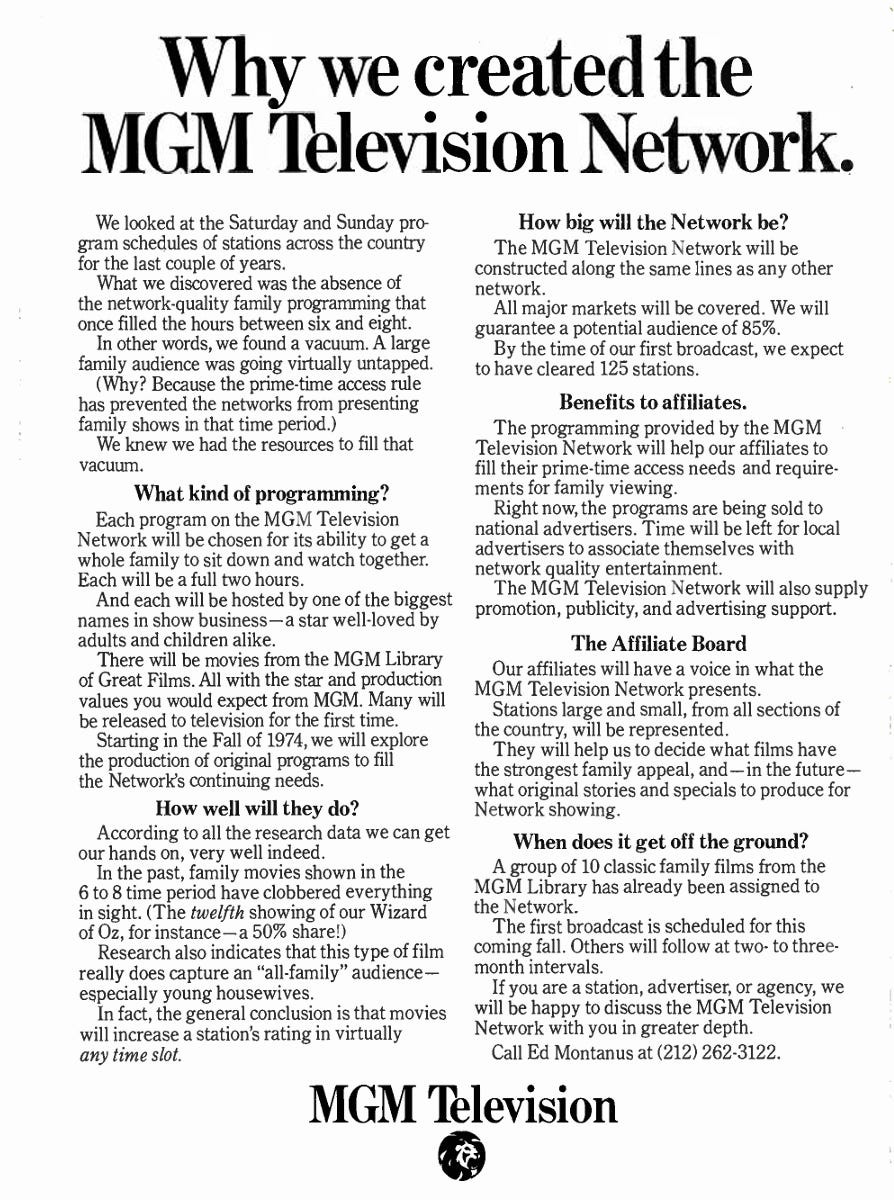
Family viewing is an important niche today — Hallmark, GAF, INSP, Disney Channel, Disney+, FRNDLY, Up TV - but it was a white space in 1973. MGM-TV wanted to sell films from its movie vaults that were safe for families to local stations for weekends. This “network” did not last long.
Ted, this is a fantastic newsletter. Great job! If you haven’t, take a look at Dick’s On Call on Prime.