"Previously On..."
A recurring look at recent TV I've watched, notable industry news, items from my archive & their significance, and the history of TV programming as told through the pages of Variety.


Nemesis (Netflix): I was a big fan of Courtney Kemp’s Power, the show she created for Starz, which yielded a universe of television series that is still alive twelve years after the mothership series initially premiered in 2014. However, I had the same problem with each of the three Power spin-offs that I have with this new series that she created for Netflix. They all start well enough, but eventually become confusing, long-winded, convoluted, and not worth following.
I enjoyed the first 3-4 episodes of Nemesis, which features a lone wolf, LA cop hunting down the leader of a robbery crew that killed a fellow detective, but it got sillier and duller as it went along, and I ended up fast-forwarding through the final episodes to see the (unsatisfying) ending. While there is a pretty amazing shootout on the streets of LA in the middle of the season, the acting is quite mediocre, and there are many cop show cliches throughout, like the put-upon precinct boss who keeps getting calls from “upstairs” because he can’t rein in his star detective, who can’t play by the rules.
Audacity (AMC): AMC’s first series about Silicon Valley, Halt And Catch Fire, which told a fictionalized version of the history of the personal computer, was great. This new program, which is a satire of the modern-day tech world, … not so much. Audacity cannot decide if it is a satire or a Succession-like drama, and it tries too hard to do both. The main characters are annoying, and I had no interest in exploring this world past the first episode.
Half Man (HBO): Richard Gadd’s follow-up to Baby Reindeer, about two kids who grow up in the same household, one abusing the other, is too grim and depressing to enjoy. Much like Audacity, I did not want to spend any more time in this universe.
Dutton Ranch (Paramount+): I was never a huge fan of Rip and Beth from Yellowstone because their characters were too over-the-top and cartoonish to be believable. The good thing about this sequel series is that they have been toned down and act more like real people. The first two episodes are fine, although not as engaging as Sheridan’s other programs. Some villains to root against are quickly established, and the additional cast, including Annette Bening and Ed Harris, is solid, so I will keep watching in the hope that it gets more engaging.
In The City (Bravo): The problem with Bravo’s Summer House is that when the housemates are not fighting, the episodes are filled with costume parties and other dull filler because not much else happens out in the Hamptons. The first episode of this follow-up series has an expanded set of characters and is less padded because there is more to do in NYC between a focus on people’s careers and the many, many locations to visit. The breakdown of Kyle and Amanda’s marriage and the subsequent “scandal” with West provides a unique dynamic for S1. It will take time to get used to some of the new people and find out if they are good TV, but that is true for any new Bravo show. I am glad to have this for Summer viewing.


Grey’s Anatomy, Texas: Now we have bookends. The only two surprises of the 26/27 Fall schedules were announced before and after Upfront week, not during. They are both spin-offs of A-level Broadcast IP and, somehow, the news of their existence did not leak.
CBS’s NCIS New York was the series that was divulged before the Upfronts; in fact, CBS didn’t even put on a traditional presentation. The second is a new Grey’s Anatomy series on ABC, which was announced the week after.
As I have written numerous times, these types of franchises are not only the lifeblood of the big four networks, but also the television ecosystem because they are far more likely to be watched in 10 or 20 years on whatever platform we are watching TV on at the time, than a streaming original.
This is the third spin-off of Grey’s, following Private Practive and Station 19, which lasted six and seven seasons respectively. The chances of Texas also lasting that long are better than 50%, and it is very smart of ABC to utilize the original Grey’s while it is still in production, since any season could be its last.
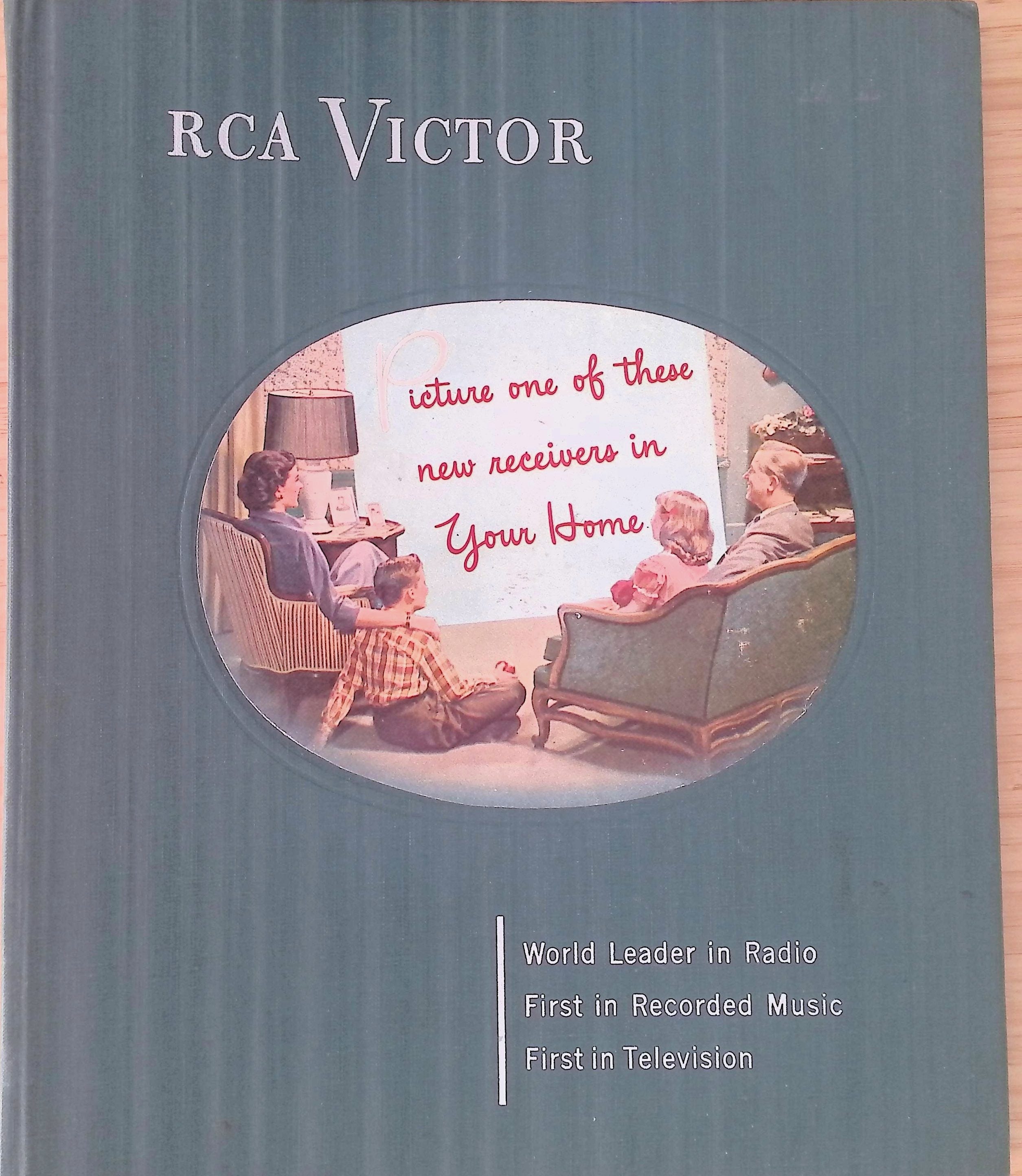
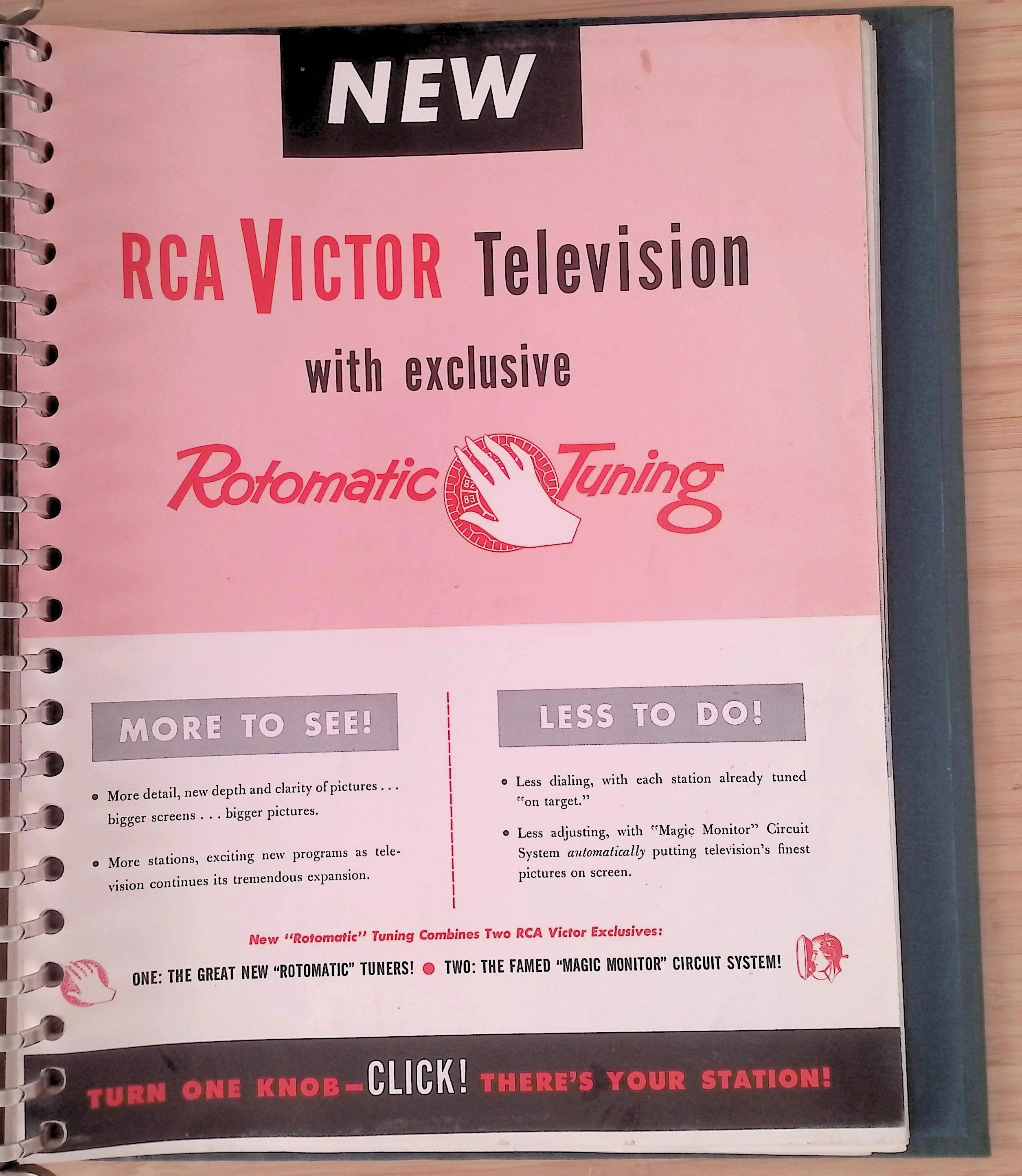
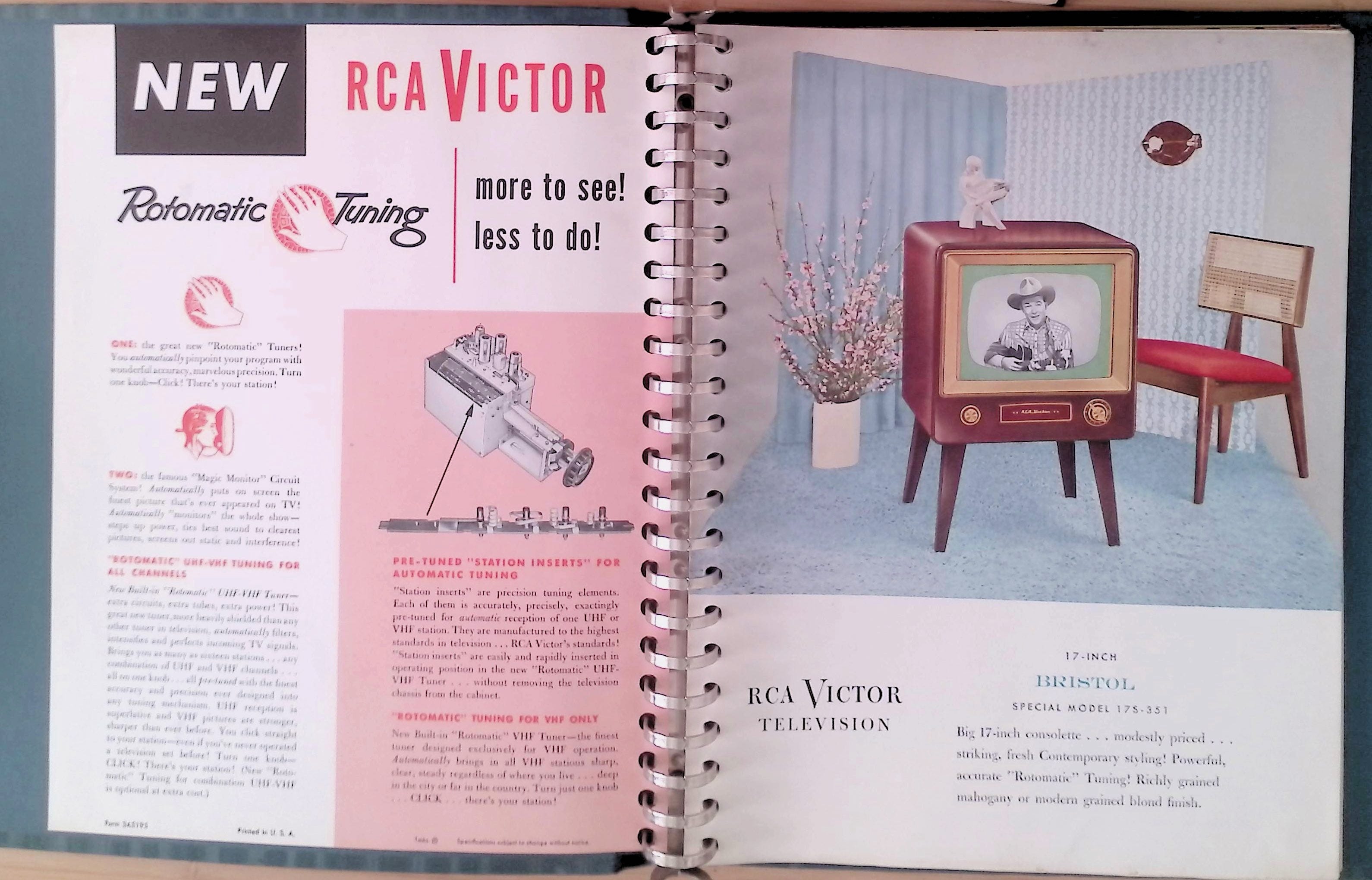


From 1953 comes this amazing RCA catalog featuring the latest and greatest in mid-century modern televisions, “Victrolas”, and radios. 1953 was the year that RCA debuted “Rotomatic Tuning” where “you automatically pinpoint your program with wonderful accuracy, marvelous precision. Turn one knob - Click! There’s your station.”
Part of this innovation included “the famous Magic Monitor Circuit System,” which “automatically puts on screen the finest picture that’s ever appeared on TV.”
This wonderful archive, now in my collection, has bright, vibrant colors and documents how the first generation of American television viewers physically watched the brand-new medium.
For a PDF of the full 100 pages, please click this link
This week, the random Variety issue comes from 4/15/53.
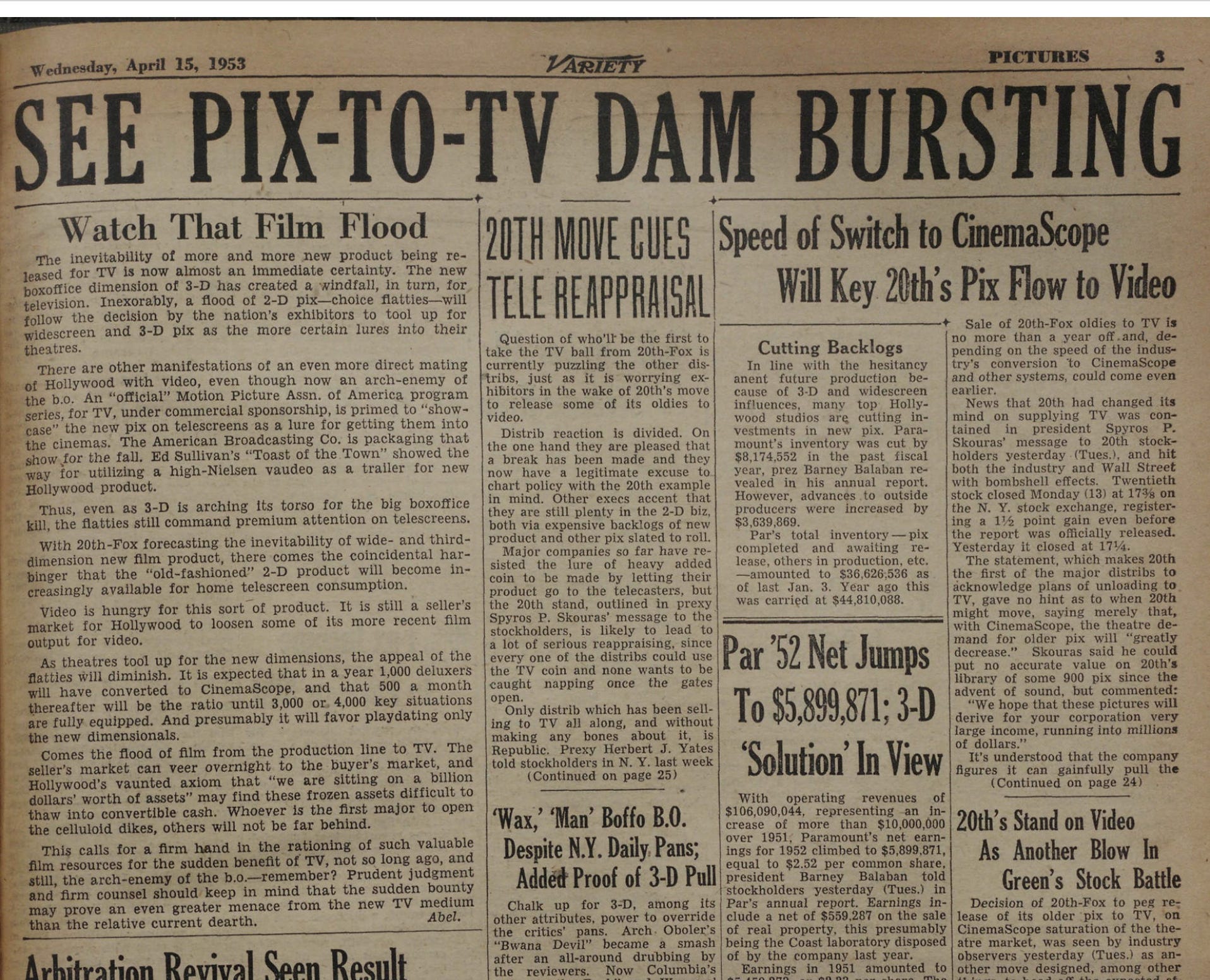
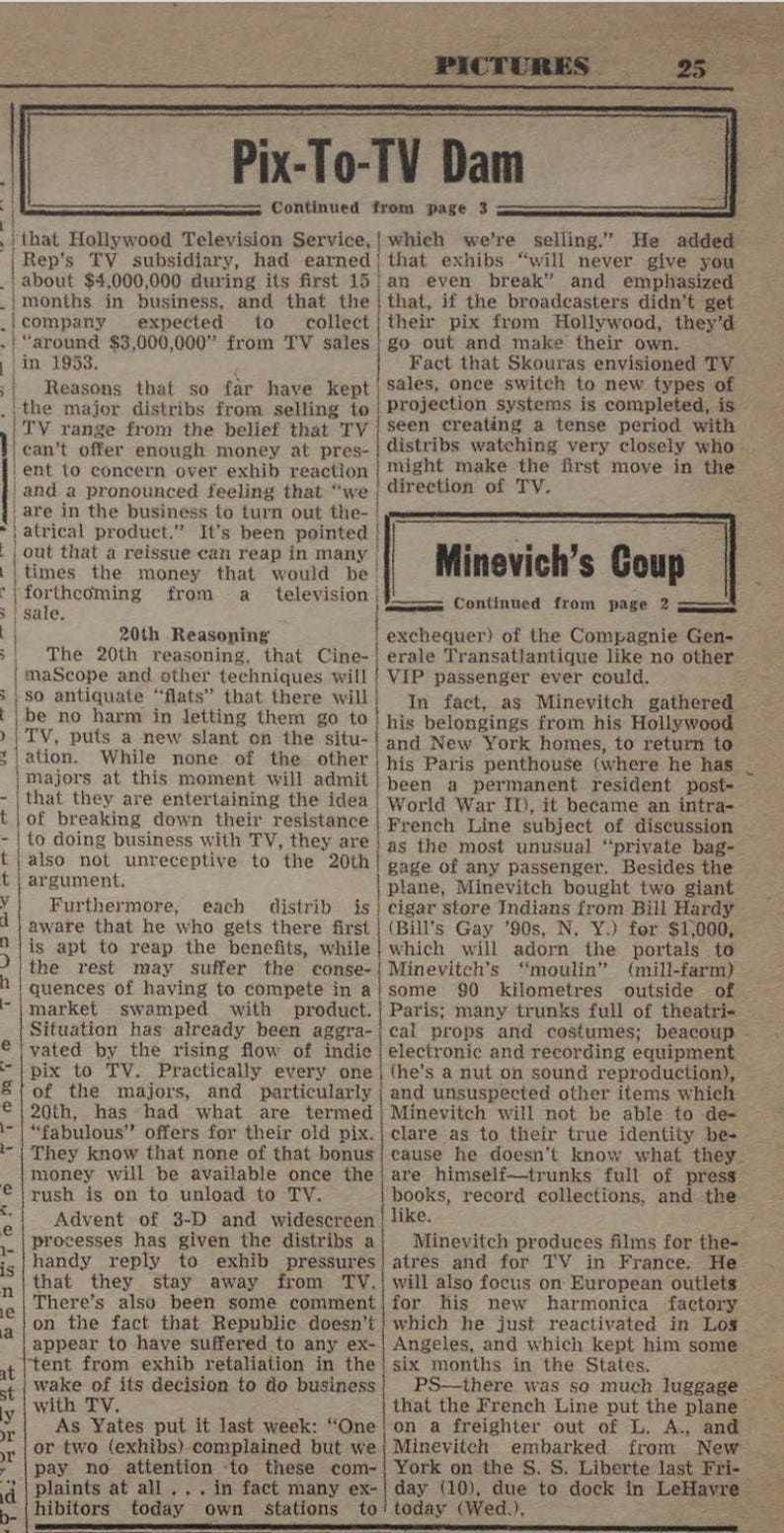
The top story under the headline “See Pix-To-TV Dam Bursting” reveals how the television business faces the same topics over and over.
In 1953, movie studios were very reluctant to sell their older films to television because that would be arming the existential competitor that was ravaging movie attendance. At this point, only two studios were selling to television stations/networks: Republic, a minor studio, and 20th Century Fox, the only major.
According to the article, Republic “had made no bones” about selling to television and “earned about $4,000,000 during its 15 months in business, and that the company expected to collect around $3,000,000 from TV sales in 1953.” 20th was selling its older pictures because innovations in the movie-going experience, such as Cinemascope and 3D, “will so antiquate ‘flats’ that there will be no harm in letting them go to TV.” “Flats” was industry speak for a flat aspect ratio.
The other studios had to grapple with this business conundrum. On the one had they didn’t want to be too late to the party and face a saturated marketplace as they had received solid offers for their movie packages. However, they were primarily in the business of making theatrical movies, believed a reissue of a film would make more money than those TV offers, and didn’t want to upset their exhibiting partners. Clearly, they all eventually went headfirst into syndication and licensed their full libraries.
The left side opinion piece entitled “Watch That Film Flood” goes into more depth on the topic. “The inevitability of more and more new product being released for TV is now almost and an immediate certainty. The new box office dimension of 3D has created a windfall, in turn for television. Inexorably, a flood of 2-D pix - choice flatties - will follow the decision by the nation’s exhibitors to tool up for widescreen and 3-D pix as the more certain lures into their theaters… Prudent judgment and firm counsel should keep in mind that the sudden bounty may prove an even greater menace from the new TV medium than the relevant current dearth.”
65 years later, studios wrestled with the exact same topic regarding selling their TV shows and movies to a new existential threat - Netflix and other streamers. The sale of content to linear or streaming was never going to be stopped - it was always a fait accompli - since it was too lucrative and destined to be part of the natural evolution of show business. In fact, the television marketplace has become the most vital source of studio revenue, yet both theaters and linear television are still around and stronger than the doomsayers would have you believe.
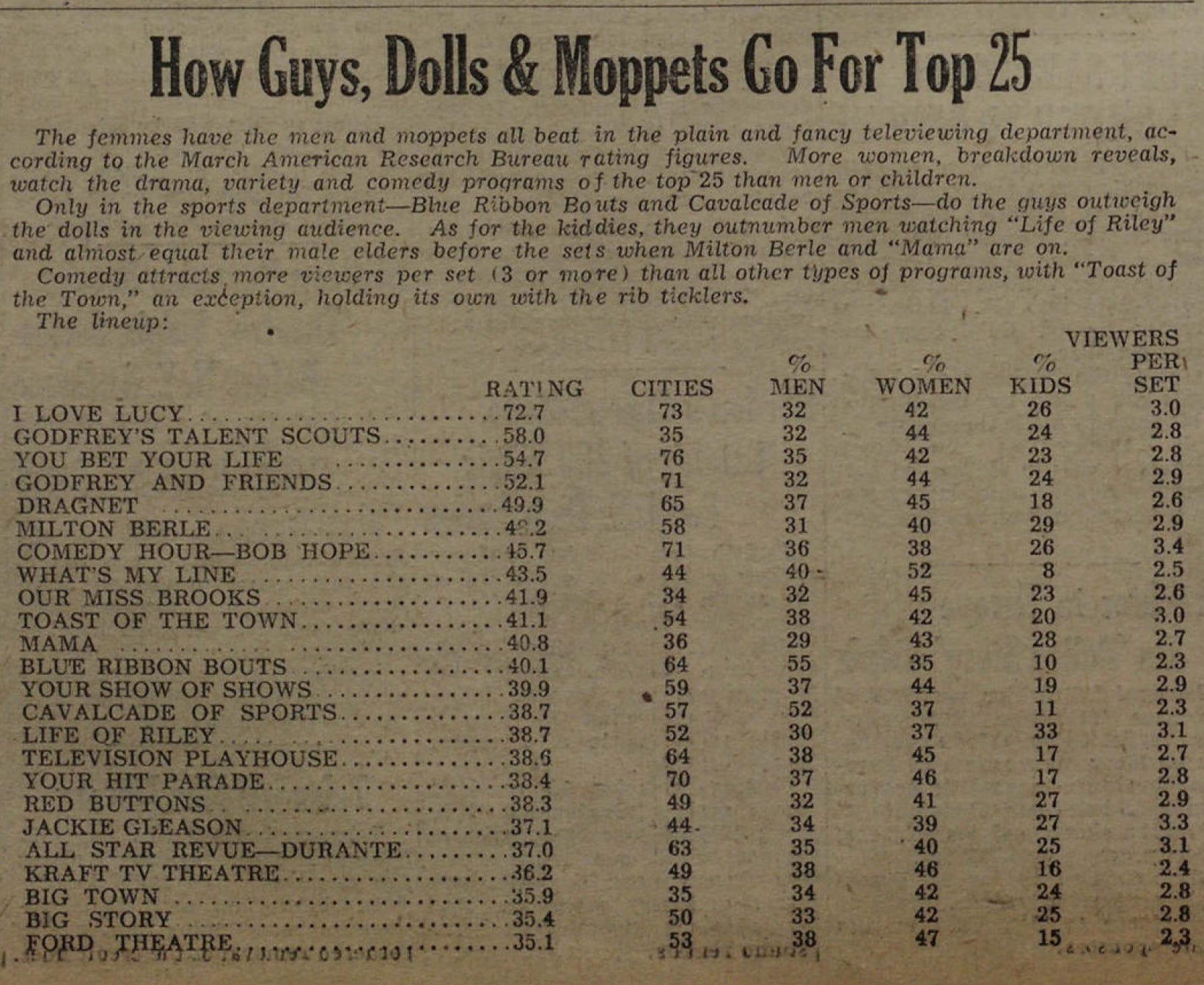
1953 ratings analysis from the American Research Bureau (ARB), a forerunner of the former Nielsen competitor for national ratings, Arbitron. The focus of the piece is how women watch more Broadcast entertainment television than men - a fact that is still true.
I Love Lucy was the number one show, with 73% of all Americans with TV sets watching. The show skewed ten points more female, but also 1/4 of the audience was made up of children.
Arthur Godfrey’s Talent Scouts, essentially America’s Got Talent meets The Voice, was the #2 show, but 15 points behind Lucy. Godfrey was so popular in the 1950s that he had two shows in the top five. The second was Godfrey and Friends, a more traditional variety show, which ranked #4.
The top drama was Dragnet, the version in black and white before Harry Morgan played Jack Webb’s partner, which ranked fifth with a 50 rating.
Other mainstays of 1950s television that still resonate today, which make the ranker are You Bet Your Life (hosted by Groucho Marx), Milton Berle, What’s My Line, Your Show of Shows (Sid Caesar), and Jackie Gleason.
The #25 program, Ford Theater, one of the many live programs of the era, still commanded 35% of TV households.
An included stat was viewers per set, which is not discussed widely anymore. However, the metric doesn’t reveal much since all the shows hovered around 3.0.
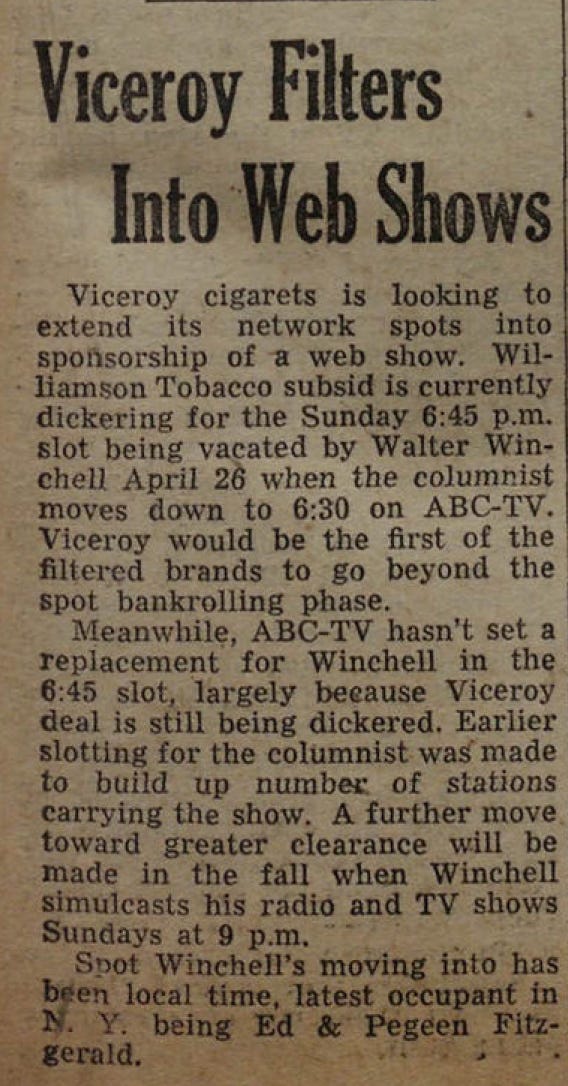
In 1953, cigarettes were a major category of television advertising, and Viceroy was one of the leading brands. According to Stanford University’s Research Into The Impact of Tobacco Advertising, that year, Viceroy spent $2.5M on advertising, $31M in today’s money, and sold six billion cigarettes. At the time, they were only placing ads inside TV shows, but they wanted to expand that into sponsoring an entire program.
That opportunity was going to come in the form of a 6:45-7pm Sunday night show because Walter Winchell’s program in that time slot was moving fifteen minutes earlier, taking over time that was formerly for local stations.
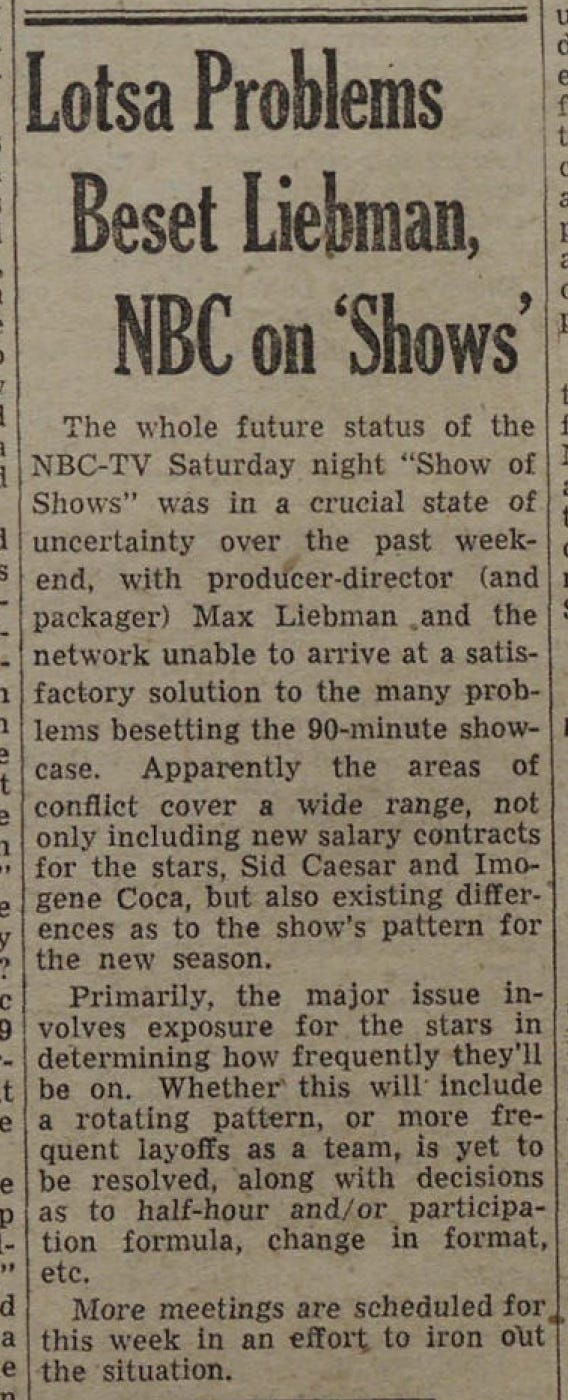
Another problem that programming experienced in the 1950s, which is still happening in the 2020s, is the expense of the cast of a hit series. Today, Dick Wolf series cannot feature all cast members in every episode because of the high salaries after 10-15 seasons on-air.
70+ years ago, the previously-mentioned Your Show of Shows was facing similar issues, “including new salary contracts for the stars Sid Caesar and Imogene Coca, but also existing differences as to the show‘s pattern for the new season. Primarily, the major issue involves exposure for the stars in determining how frequently they’ll be on. Whether this will include a rotating pattern or more frequent layoffs as a team, is yet to be resolved, along with decisions as to half-hour and/or participation formula, change in format, etc.”
These conflicts apparently did take a toll as the show’s last episode aired a little more than a year later, in June of 1954, ending a heralded five-season run.